
The secret to a merch program that actually works isn't a bigger budget. It's a higher keep rate.
There's a statistic that gets thrown around in the promotional products industry that should stop every brand manager in their tracks: the average branded item is discarded within a year of receipt. Not worn out. Not used up. Just discarded — because it wasn't good enough to keep.
Think about what that means for the average merch budget. If the majority of what you're producing ends up in a donation bin or a landfill within twelve months, the effective return on that investment isn't low. It's close to zero.
At K2K Studios, we talk about this in terms of retention rate — the percentage of items distributed that are still in active use after a meaningful period of time. And we've built the entire K2K Standard around a single conviction: that a merch program with an 80% retention rate at the one-year mark will outperform any high-volume, low-quality alternative on every metric that matters.
We call it the 80% Rule. Here's what it means — and why it changes how you should think about every merch decision you make.
What Retention Rate Actually Measures
Retention rate is simple in concept: of every 100 items you distribute, how many are still being actively used 12 months later?
For commodity merch — cheap blanks, low-quality decoration, items selected for price point rather than genuine utility — honest retention rates are sobering. Industry research consistently suggests that a significant portion of promotional items are discarded within months of receipt. For truly low-quality items — the scratchy polo, the thin t-shirt that shrinks in the first wash, the hat with the cracking logo — the retention rate can be as low as 20–30%.
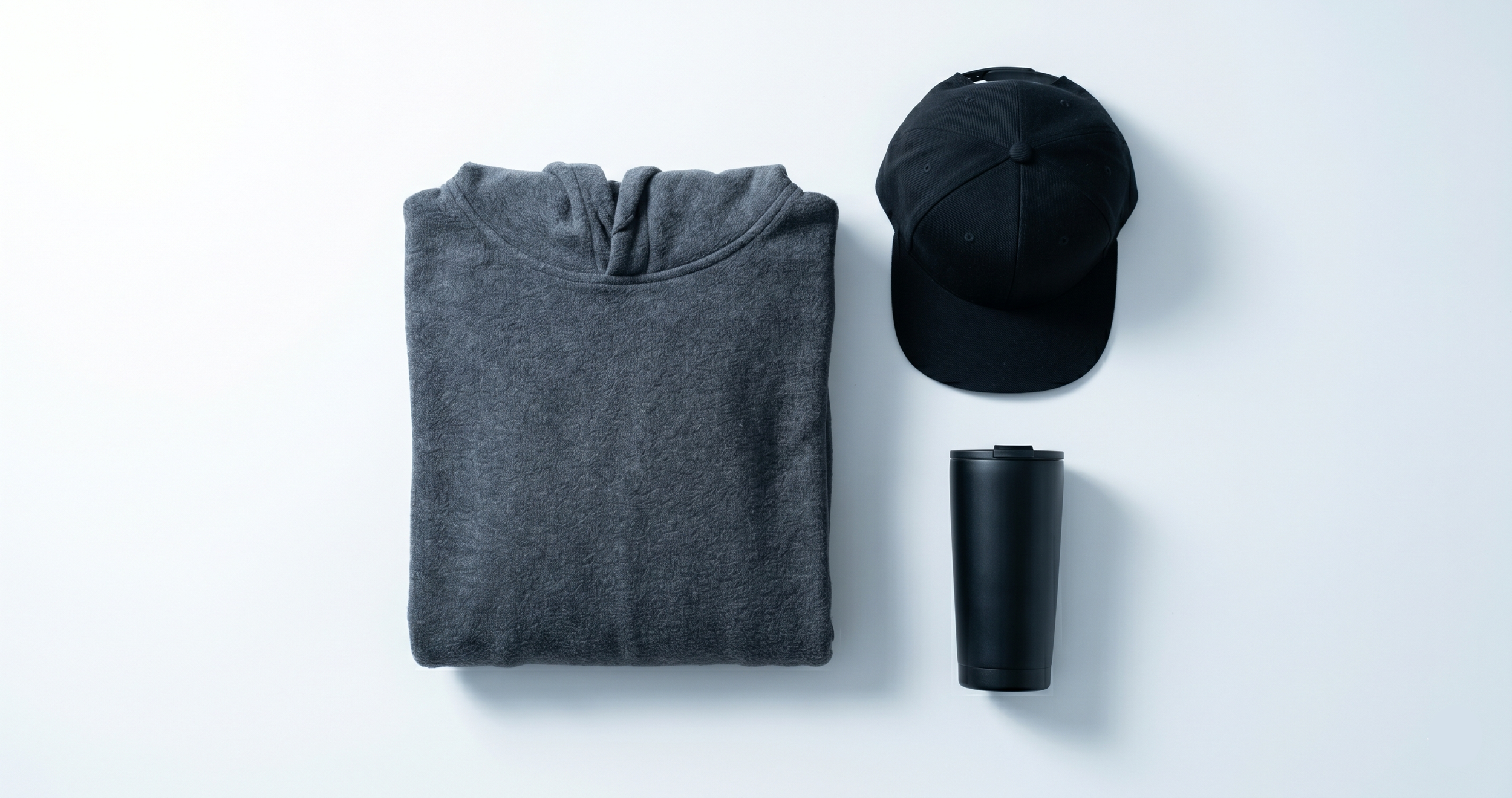
For premium merch — retail-grade blanks, precise decoration, items selected because they solve a real need for a real person — retention rates climb dramatically. A hoodie someone genuinely loves. A hat that becomes their favorite. A tumbler that earns a permanent spot in the morning routine. These items don't get discarded. They get used until they wear out — which, with quality construction, can take years.
The 80% Rule is the target: design your merch program so that eight out of ten items distributed are still in active use at the one-year mark. Hit that number and the economics of your merch investment transform entirely.
The Math That Makes 80% Matter
Let's put real numbers on why retention rate is the most important variable in merch program economics.
Scenario A: Low-retention program 100 units ordered at $12 each = $1,200 total investment Retention rate at 12 months: 25% = 25 items still in use Effective cost per retained item: $48 Lifetime impressions per retained item: ~500 Total lifetime impressions from program: 12,500 Effective CPM: $96
Scenario B: High-retention program 50 units ordered at $45 each = $2,250 total investment Retention rate at 12 months: 80% = 40 items still in use Effective cost per retained item: $56 Lifetime impressions per retained item: ~3,500 Total lifetime impressions from program: 140,000 Effective CPM: $16
The high-retention program costs nearly double upfront. It generates eleven times more lifetime impressions. Its effective cost per thousand impressions is six times lower than the low-retention alternative.
This is why the 80% Rule matters. Not because premium merch is inherently superior in some aesthetic sense — but because retention rate is the variable that makes or breaks merch program economics. And retention rate is almost entirely determined by quality.
The Four Drivers of High Retention
Hitting 80% retention isn't accidental. It's the result of four deliberate decisions made before an order is placed:
1. Blank quality that earns daily use.
The single biggest driver of retention is whether someone genuinely wants to wear or use the item. Retail-grade blanks — the right weight, the right fit, the right fabric composition — produce items that compete with what's already in someone's wardrobe rather than items that feel like a consolation prize.
A heavyweight hoodie in a soft-touch fabric that fits well and holds its shape through washing earns daily use because it's genuinely good. A thin, stiff hoodie that shrinks and pills gets relegated to the back of a closet within weeks. The blank decision is the retention decision — everything else is downstream of it.
2. Decoration that holds up over time.
High retention requires decoration that looks as good after 50 washes as it did on day one. High-density embroidery with quality thread. DTF transfers applied with proper adhesive and pressure. Sublimation dye fused at the molecular level. These methods produce decoration that outlasts the garment because they're executed correctly from the start.
Decoration that cracks, fades, peels, or distorts after a handful of washes doesn't just reduce retention — it actively damages the brand every time the item is seen in its degraded state. A cracking logo on a pilling shirt is a negative brand impression. Quality decoration eliminates that risk entirely.
3. Item selection matched to the recipient's actual life.
Retention is highest when the item solves a real need for the specific person receiving it. A performance jacket for a team that works outdoors. A retail-quality hoodie for a remote team that lives in comfortable apparel. A great tumbler for a client who lives at their desk.
Generic item selection — "something everyone can use" — produces mediocre retention because it serves no one's actual life particularly well. Audience-specific item selection produces dramatically higher retention because the item earns a place in the recipient's routine.
4. Distribution that treats the item as a gift, not a giveaway.
How an item is distributed shapes how it's perceived — and perception shapes retention. A premium hoodie handed out in a plastic bag at a trade show table gets treated like a trade show freebie. The same hoodie delivered in intentional packaging with a personal note gets treated like a gift. People keep gifts. They discard freebies.
The presentation and context of distribution is part of the retention equation — which is why K2K thinks about the full gifting experience, not just the item inside.
Applying the 80% Rule to Your Merch Program
The practical application of the 80% Rule is a shift in how you evaluate every merch decision — from a cost-per-unit framework to a retention-first framework.
Before placing any merch order, run it through these three retention questions:
Would I keep this? If you wouldn't reach for it yourself — if you wouldn't wear it on a Saturday, use it at your desk, or display it in your home — the retention math is probably going to disappoint. Your honest personal reaction is a reasonable proxy for your audience's reaction.
Is the quality high enough to compete with what's already in someone's life? Your branded hoodie isn't competing against other branded hoodies. It's competing against every hoodie the recipient already owns. If it doesn't hold its own against retail alternatives in fabric, fit, and finish, it won't earn a place in the rotation.
Is this item genuinely matched to the recipient's needs? A great item distributed to the wrong audience still has low retention. A fitness studio distributing high-end corporate polos. A trade crew receiving delicate fashion-forward tees. Match the item to the life — or the retention math won't work regardless of quality.
The Compounding Effect of High Retention
Here's the aspect of the 80% Rule that doesn't show up in a single-order analysis: the compounding effect of consistent high-retention merch over time.
A merch program that reliably produces items people keep builds something that low-retention programs never can — a growing population of brand ambassadors in the world. Every high-retention item distributed adds to that population. Every year those items remain in use, that population generates impressions. Over three to five years of consistent high-retention merch, the cumulative awareness and relationship equity generated is genuinely significant — and it costs a fraction of what equivalent digital advertising would.
Low-retention programs reset constantly. High-retention programs compound. The difference over a five-year horizon is enormous — and it starts with a single decision to prioritize keep rate over unit count.
How K2K Builds Retention In
At K2K Studios, the 80% Rule isn't a metric we ask clients to track — it's a standard we build into every project from the first conversation.
The blank recommendations Kim and Kara make are retention-first recommendations. The decoration methods we propose are selected for longevity, not just initial appearance. The art review process exists to ensure that what arrives in someone's hands looks exactly right — because first impressions shape retention, and a logo that looks slightly off on arrival starts the retention clock in a very bad place.
Every decision in The K2K Method is designed to produce one outcome: merch that earns a permanent place in someone's life. Not just on the day it's received. Not just for the first few wears. For the long haul.
Because eight out of ten items still being worn a year from now isn't just good economics. It's what Keen 2 Keep actually means.
Ready to build a merch program with retention built in? Let's talk about what 80% looks like for your brand.